
October 10th rolls around and suddenly every organization posts a green ribbon. Good intentions, mostly. But here is the uncomfortable truth: awareness does not treat PTSD. A single day of acknowledgment does not replace 364 days of structure, resources, and follow-through.
The 2025 National Veteran Suicide Prevention Annual Report says 6,398 veterans died by suicide in 2023. Sixty-one percent of them were not engaged with VA health care during their final year. Those two facts together tell you everything about where the gap is. It is not that help does not exist. It is that sustained, year-round connection to care is hard to maintain, especially when motivation is exactly what mental health challenges are draining from you.
This is not a list of hotlines (though we will cover crisis resources). This is a plan for actually maintaining your mental health the way you maintained your physical fitness in service. Daily habit. Consistent standard. Regular assessment. No single moment of inspiration, but a system that holds up when you have nothing left to give.
Why Awareness Days Are the Wrong Framework
Military culture already understands this logic. You do not peak fitness on one day. You do not maintain readiness on a single workout. You build habits, run periodic assessments, adjust the plan based on performance data, and keep showing up even when no one is watching.
Mental health works the same way. The problem with framing everything around awareness days is that it treats mental health as something you address reactively, when triggered, during a crisis, or on a designated calendar moment. That is exactly backwards from what the evidence shows about sustainable mental health management.
Suicide is the second leading cause of death among veterans under age 45. Veteran suicide rates sit about 60 percent higher than the national average. The Face the Fight coalition, which brings together over 250 organizations with a shared goal of reducing veteran suicide, has set 2032 as a target date for measurable progress. That is six years from now. The question is not whether help exists. The question is whether you have a plan to access it before you need it in a crisis moment.
The Three-Layer Framework
A sustainable year-round mental health plan has three layers: daily maintenance, regular check-ins, and crisis resources. Most veterans have the crisis layer (988, Press 1). Some have the check-in layer (therapy appointments every few weeks). Almost nobody has a solid daily maintenance layer, and that is where the real breakdown happens between now and crisis.
Layer 1: Daily Maintenance
Daily maintenance does not have to be elaborate. The goal is not to meditate for an hour or journal three pages every morning. The goal is to build at least one non-negotiable touchpoint that connects you to your own mental state before it becomes a problem.
VA's mental health apps are a genuine resource here. These are not crisis lines. These are daily-use tools that help you track symptoms, practice skills, and maintain awareness. The PTSD Coach app, the mindfulness tools, the depression management resources — they are designed for exactly this layer. You do not need a diagnosis to use them. You do not need an appointment. They are free, available right now, and built for exactly the kind of consistent low-level engagement that prevents escalation.
VA's Veteran Training portal is another tool that gets overlooked. It has self-help modules for problem-solving, anger management, and parenting skills. The entire platform is anonymous. Nobody is tracking whether you used it. It exists because the VA knows that some veterans will not ask for help in person but will work through a module alone at 2am when睡不着. Use that.
Layer 2: Regular Check-Ins
Regular check-ins are where a professional comes in. This does not have to mean weekly therapy sessions. For many veterans, monthly appointments with a provider, or even quarterly, combined with consistent use of daily maintenance tools, is the right structure.
Here is what the VA actually offers for ongoing care: evidence-based therapies including Cognitive Processing Therapy (CPT), Prolonged Exposure (PE), and EMDR for trauma; medication management when appropriate; telehealth options that let you connect with a provider without driving to a facility; residential rehabilitation programs for veterans who need more intensive, live-in support; and supported work settings that combine employment with mental health treatment for veterans navigating both.
Same-day services exist at VA facilities. When you reach out, you start receiving help the same day. That is not marketing language — that is the actual VA policy for mental health access. If you have been putting this off because you thought it would take weeks to get an appointment, call your nearest VA medical center and ask about same-day access.
Layer 3: Crisis Resources
You already know 988, Press 1 for the Veterans Crisis Line. Text 838255. Chat at VeteransCrisisLine.net. These are available 24 hours a day, 365 days a year, and the people on the other end are trained specifically for the veteran experience. This is not a last resort. This is a resource, and using it is a sign of operational awareness, not weakness.
The distinction that matters here is the difference between a mental health crisis and a mental health emergency. A crisis is when you are struggling and need support to stabilize. An emergency is when you or someone else is in immediate danger. The Veterans Crisis Line handles both, but knowing the difference helps you make the right call faster.
VA vs. Community Care: The Actual Breakdown
One of the most common questions I get from veterans is whether to use VA care or community providers. Here is the honest breakdown.
VA care is comprehensive, free for most enrolled veterans, and specifically designed around the veteran experience. Providers at VA facilities have training in military culture, combat trauma, and veteran-specific stressors. If you are enrolled, this is almost always the right first call.
Vet Centers are a separate resource that many veterans do not know about. They offer free individual and group counseling, couples and family counseling, military sexual trauma counseling, readjustment counseling, and bereavement support. Critically, you do not have to be enrolled in VA health care to use a Vet Center. You do not have to be receiving disability compensation. You just have to be a veteran. If you do not have VA health care enrollment yet, start with a Vet Center. Call 877-927-8387.
Community care comes into play when VA cannot provide a service you need in your area, or when you are not yet enrolled in VA care. The VA Community Care network exists for exactly those situations. Your Vet Center counselor or VA care coordinator can help you navigate community referrals if that is what your situation requires.
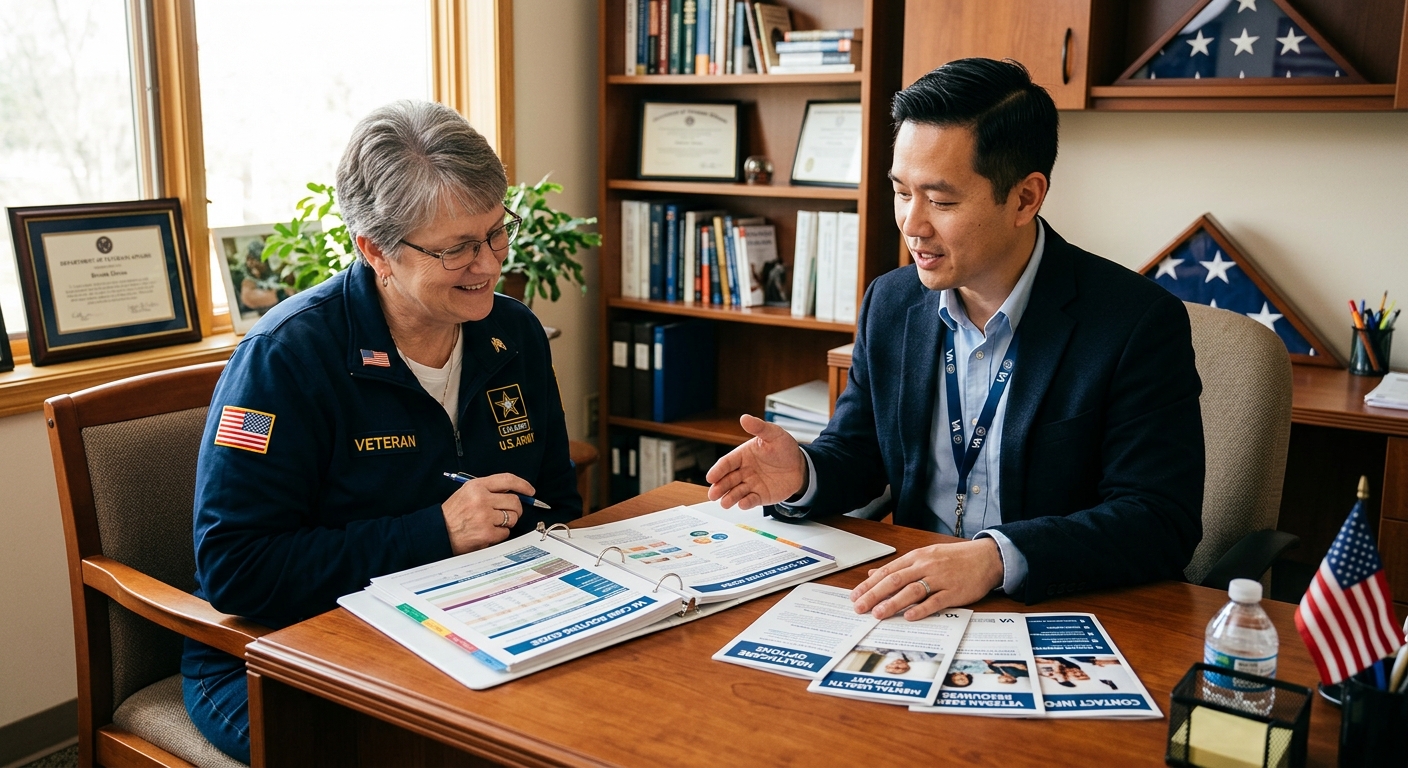
Staying Consistent When Motivation Is Gone
This is the hardest part, and I am not going to pretend otherwise. The nature of depression, anxiety, PTSD, and most mental health challenges is that they directly attack the motivation and executive function you need to seek help. You cannot bootstrap your way out of this with willpower. You need a system.
A few things that actually work:
Tie mental health maintenance to something you already do every day. If you check your phone every morning, put the VA mental health app on your home screen. If you drink coffee in the same spot, leave the Veteran Training portal open in a tab there. The goal is to reduce friction to zero.
Set a monthly reminder on your calendar for a check-in. Not a daily habit, not an aspirational weekly plan. Just once a month, on a specific date, something happens that prompts you to assess how you are doing. It could be a simple as asking yourself three questions: Am I sleeping? Am I using my tools? Do I need to call someone? That monthly touchpoint keeps you honest with yourself.
Connect with other veterans. Make the Connection is a VA resource that links veterans to local mental health resources and, just as importantly, to other veterans who have been through what you are going through. Peer support is not a soft concept. It is one of the most evidence-backed interventions for veteran mental health specifically.
If you have a bad month and fall off the plan, do not wait until next January to restart. The plan does not require perfection. It requires continuity. Restarting after a bad month is not failure. Quitting after a bad month is.
For Families and Caregivers
If you are a family member reading this, the Coaching into Care program through VA is specifically for you. It is a free program where a licensed psychologist or social worker talks to you about your loved one's mental health and helps you figure out how to start the conversation and get them connected to care. Call 888-823-7458.
The Caregiver Support Line at 855-260-3274 connects caregivers to support coordinators who can help you navigate the system and find resources for yourself in the process. You cannot take care of someone else if you are falling apart. That is not selfish. That is operational logic.
The Monthly Self-Check
Here is the actual CTA for this post. Every month, on a date you choose, run through these five questions. Write the answers down somewhere private. This is not a test. It is a data set. Over time, it tells you whether you are trending up, trending down, or flat. If you see three consecutive months of decline, that is information. Act on it.
One: How am I sleeping? Not whether you are getting enough hours, but whether you are waking up rested or dragging yourself out of bed every day.
Two: Have I used my daily maintenance tools at all this month? Even once? Even briefly?
Three: Have I talked to another person about how I am doing? A friend, a family member, a provider, a peer. Anyone.
Four: Am I avoiding anything I normally would not avoid? Work, people, places, activities. Isolation is a signal.
Five: Do I know what my next mental health appointment is? If the answer is no, that is your action item for the month.
Bottom Line
World Mental Health Day is fine. Awareness is fine. But you do not defend the border one day a year. You do not maintain your body one day a year. Mental health, for veterans especially, is a year-round mission. You already know how to do missions. Apply that same discipline to the interior work. It is not less important than the things you did in service. It is the same work, in a different domain.
If you need help figuring out your specific care routing, Command.ai connects veterans to resources and can help you map out your first steps.