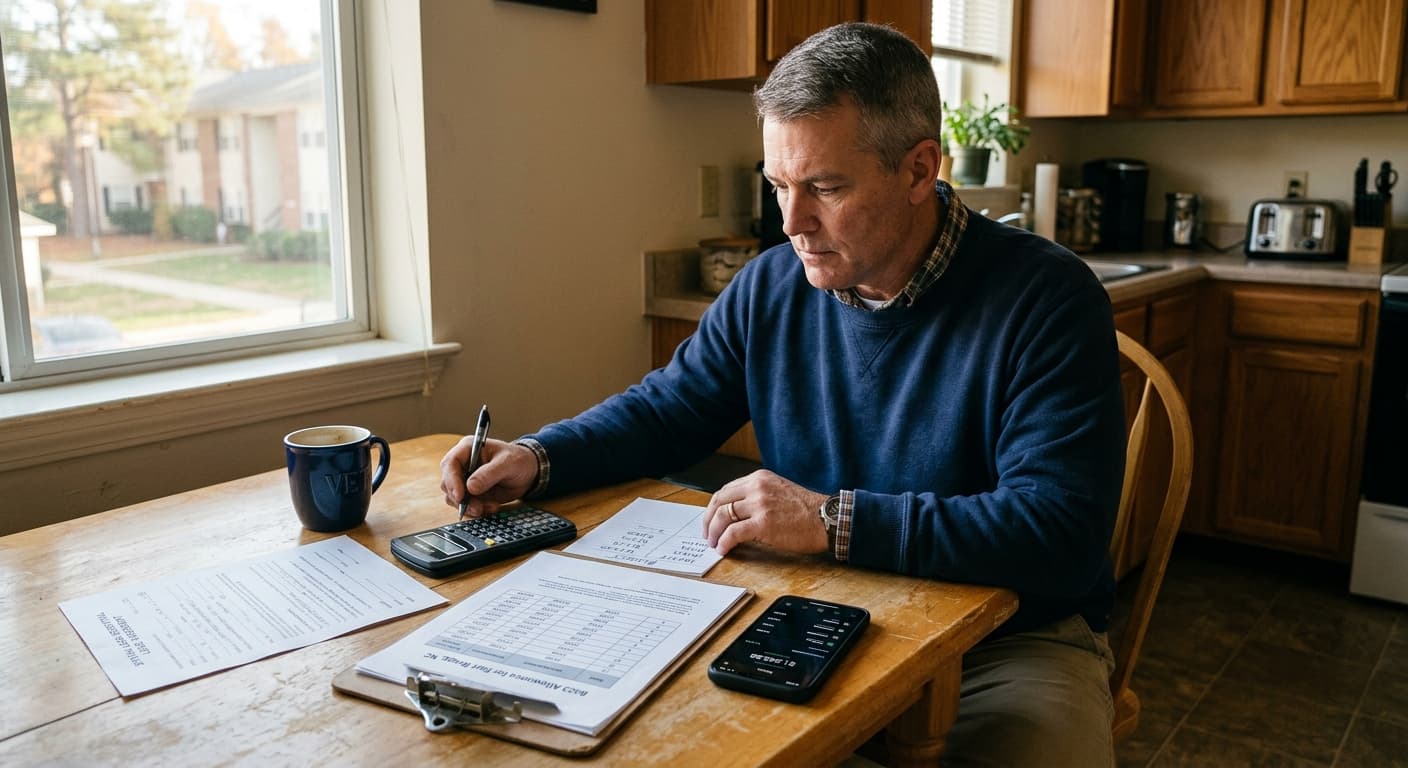
Every few years a housing bill shows up on the Hill, and every time, I watch service members and veterans start treating it like a raise that already cleared payroll. The BAH Restoration Act is the latest one. Two versions, both stuck at the front door of the Armed Services committees, both already being talked about online like the math has changed.
It has not. Not yet. Maybe not at all.
If you are about to PCS, separate, or sign a lease anywhere near a base, you cannot afford to budget off a bill that has not passed. So let me walk through what is actually in the BAH Restoration Act, what BAH does today, and how to build a housing plan that holds whether the bill goes through or dies in committee.
What the BAH Restoration Act actually is
There are two bills, not one, and they are mirror images of each other.
On the House side, H.R.1956 was introduced on March 6, 2025 by Rep. Marilyn Strickland and referred to the House Committee on Armed Services the same day. On the Senate side, S.1122 was introduced on March 25, 2025 by Sen. Raphael Warnock and referred to the Senate Committee on Armed Services that day. The Congressional Research Service summary on each bill says the same thing in slightly different words. It would increase the monthly BAH amount for members inside the United States, and it would set the monthly allowance to the monthly cost of adequate housing in the area, as determined by the Department of Defense, for members in the same pay grade and dependency status.
That second sentence is doing the heavy lifting. Today, BAH is not designed to fully cover housing. The bill says it should be set to the cost of adequate housing. If passed in current form, that is a structural shift, not a cost-of-living tweak.
Important caveat. Both bills are sitting at "referred to committee." Neither has been voted out of committee, sent to the floor, passed by either chamber, reconciled, or signed. As of the most recent legislative updates, that is the only action on record.
What BAH actually covers today, and what it does not
This is the part that surprises people the first time they read the DoD's own language on it.
From the Defense Travel Management Office page on Basic Allowance for Housing, BAH provides equitable housing compensation based on local civilian housing markets within the 50 U.S. states when government quarters are not provided. That word "equitable" is not the same as "full." DoD spells that out plainly in a different line on the same page. BAH is not intended to cover all of a service member's housing costs.
DoD goes further. Members choose how to allocate income, and actual out-of-pocket expense may be higher or lower than the prescribed rate based on the housing choice the member makes. In other words, where you live, what you rent, and how much you negotiate is on you. The allowance is a benchmark, not a reimbursement.
A few more facts that matter for budgeting:
- Allowances reflect household rental costs, and rental prices generally change 2% to 5% from year to year, per DoD.
- Individual rate protection means a member cannot receive a lower BAH rate than the previous year as long as eligibility status remains unchanged.
- Rate protection ends if status changes due to a PCS, a reduction in paygrade, or a change in dependency status.
- BAH distinguishes only between with-dependents and without-dependents. The number of dependents does not change the rate.
- Non-locality BAH applies in narrow situations: reservists on active duty for less than 30 days, members in transit from select areas where no prior BAH rate exists, and some child-support situations.
Read those bullets again before you negotiate a lease. The "single rate" assumption catches young troops every PCS cycle. So does the rate-protection rule, which protects you on a renewed lease in the same place but does not protect you when you move.
What the bill would change if it became law
The CRS summary on both H.R.1956 and S.1122 keeps it short. The bill would tie the monthly allowance to the monthly cost of adequate housing in the area, as determined by DoD, for members in the same pay grade and dependency status, and it would increase the monthly BAH amount for members inside the United States.
What that means in practice depends on how DoD operationalizes "adequate housing." The legislative text leaves that determination with the department, which is normal for housing-rate methodology. The structural change is the framing. Today, the rate is built around equitable compensation that is explicitly not meant to cover everything. Under the bill, the rate would be built around the actual cost of adequate housing in the area for that pay grade and dependency status.
I will not pretend I know what the dollar delta would look like for any specific zip code. Nobody does yet, because the bill has not moved and DoD has not published any companion analysis. Anyone giving you a precise "your BAH would go up by X dollars" projection is making it up.
Where the bill actually stands, and why that matters for your bank account
Here is the legislative reality, written down so it is harder to forget.
H.R.1956 was introduced March 6, 2025, and referred to the House Committee on Armed Services the same day. That is its only listed action. S.1122 was introduced March 25, 2025, and read twice and referred to the Senate Committee on Armed Services. That is its only listed action. The VA Loan Network's April 14, 2026 article on 2026 BAH projections describes the same status, and emphasizes that as of its publication, neither chamber had passed the legislation and nothing had been sent to the President.
Bills referred to Armed Services do not always come back. They stall, they get rolled into the National Defense Authorization Act, they get rewritten, they get dropped, or they pass. Any of those outcomes is on the table here. None of them are imminent based on what is publicly listed.
Why does this matter for your money? Because every PCS season I see the same pattern. A service member reads a headline about a proposed BAH increase, runs numbers off the implied higher rate, signs a lease, and then the bill stalls. The current rate is what hits the account on payday. The proposed rate does not. If you build your housing budget on the proposed rate, you are pre-spending money that does not exist.
That is the rule I would write on every transition checklist. Budget the rate that already lands. Treat any future bump as upside.
How to build a safer housing budget during transition, PCS, or separation
Housing is usually the line item that breaks a transition plan. Not the moving truck, not the security deposit. The rent itself, every month, for the length of the lease. So this is where I would slow down and do real math.
Start from the published rate, not a projection. Pull the current with-dependents or without-dependents BAH for your pay grade and the zip code you are actually moving to. That is the floor of the conversation. If you have not signed a lease yet, that number is what you should be planning around, even if you have read 14 articles about the BAH Restoration Act this week.
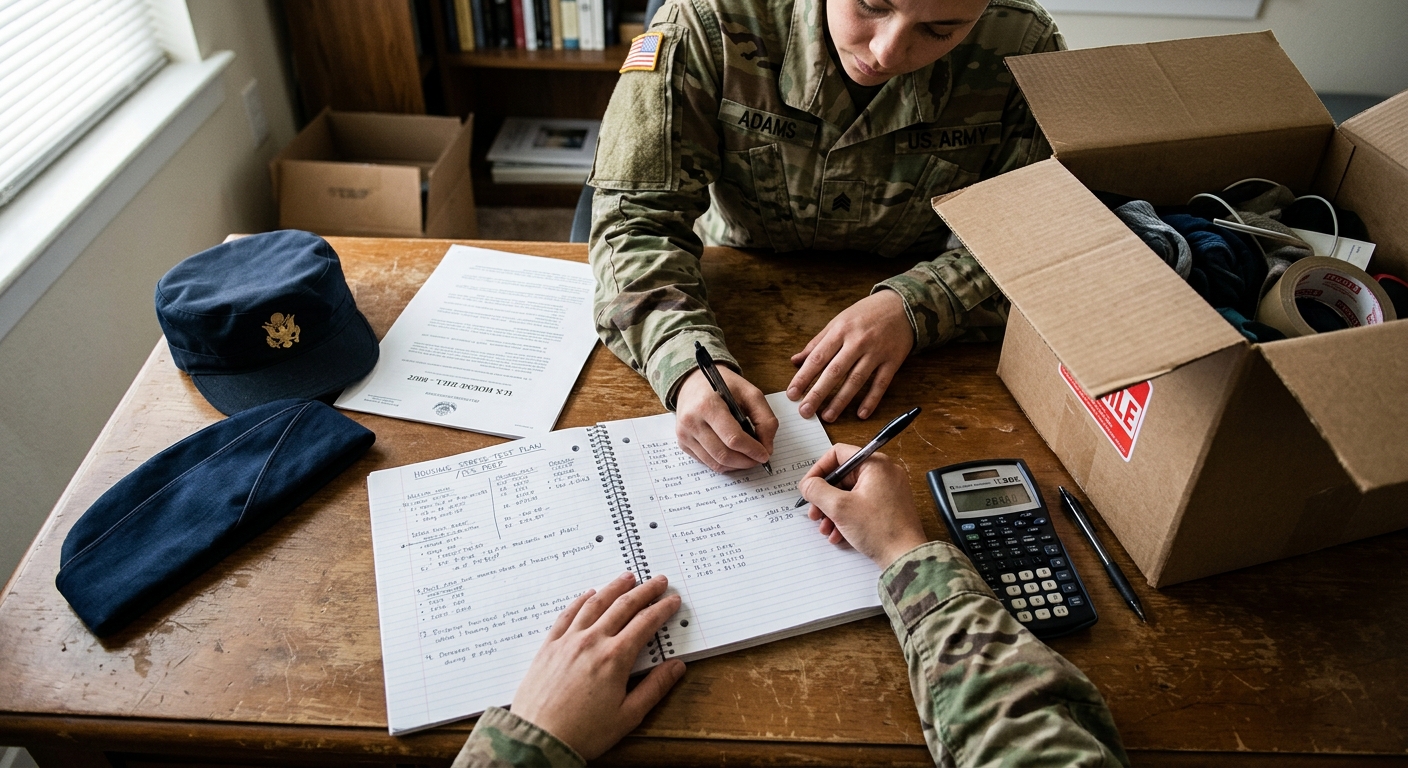
Run a stress test against a 5% rent increase. DoD says rental prices generally change 2% to 5% year over year. If your lease has a renewal clause and you plan to stay past 12 months, model what a 5% bump does to your housing line. If you would not be okay paying 105% of today's rent on today's BAH, you are signing a lease at the edge of your comfort zone.
Plan the gap, not the average. BAH is built around the local housing market for an entire pay grade, not your specific apartment. The DoD page is explicit that out-of-pocket may be higher or lower than the prescribed rate. The honest move is to write down your expected monthly out-of-pocket gap, in dollars, before you sign. If that number is bigger than you can absorb without touching savings, the apartment is too expensive for your current rate. The proposed bill does not change that.
Know what breaks rate protection. Rate protection holds you harmless if rates drop, but only while your status stays the same. A PCS resets it. A paygrade reduction resets it. A change in dependency status resets it. If any of those is on your radar in the next 12 months, do not assume the current rate follows you. Recheck the rate at the new zip code, with the new status, before you commit to a lease there.
For separation, model life without BAH at all. The day you separate, BAH stops. If you are heading to school on the GI Bill, the Monthly Housing Allowance is a different mechanism with its own rules. If you are heading straight into a civilian job, your housing line is now whatever your employer pays you, before tax, minus everything else. Veterans get hurt in the first 60 days post-separation when they keep the same apartment they had on active duty and forget the housing piece of their paycheck just disappeared. Run the post-separation numbers before you sign or renew.
Do not stack two "if" benefits in the same plan. A pending bill is an if. A pending VA disability rating is an if. A pending VR&E approval is an if. If your housing math only works because two or three of those land the way you hope, your math does not actually work. Build the budget on what is already in the account, and let the rest be cushion.
Questions to answer before you sign anything
If you do nothing else this week, sit down and answer these.
- What is my current published BAH rate, with my actual pay grade, dependency status, and the zip code I am moving to?
- What is the monthly rent on the apartment or house I am considering, including any required fees?
- What is my expected monthly out-of-pocket gap, in dollars, before utilities?
- What does my budget look like if rent goes up 5% on renewal and BAH does not move?
- Is there any status change in the next 12 months that would reset my rate protection?
- If I separate during this lease, can I cover this rent without BAH at all?
If you cannot answer those without a guess, your housing plan is leaning on a hope, not a number. The BAH Restoration Act might pass. It might not. Either way, the lease you sign this month is binding for 12 months, and the rate that hits your account is the one DoD has on the books today.
Download the housing budget stress-test worksheet
I built a worksheet for this exact decision. It walks through your published BAH rate, your projected rent, your monthly gap, a 5% renewal stress test, a separation scenario where BAH disappears entirely, and a side panel for any pending benefit decisions you do not want to count on yet. It is built around the published rates, not legislative projections, so the numbers stay honest no matter what happens with H.R.1956 and S.1122.
Download the housing budget stress-test worksheet and run your numbers before you sign a lease, not after.
Sources: Congress.gov, H.R.1956 BAH Restoration Act, 119th Congress (congress.gov/bill/119th-congress/house-bill/1956); Congress.gov, S.1122 BAH Restoration Act, 119th Congress (congress.gov/bill/119th-congress/senate-bill/1122); Defense Travel Management Office, Basic Allowance for Housing overview (travel.dod.mil/Allowances/Basic-Allowance-for-Housing/); VA Loan Network, 2026 BAH Rate Projections, updated April 14, 2026 (valoannetwork.com/2026-bah-rate-projections/).